Style Notes
How to Style a Festive Dupatta
Five ways to wear organza and chiffon this festive season, from the classic one-shoulder drape to the cape, with the pins, pleats and proportions our stylists swear by.
By Mahnoor Aziz, Head Stylist
4 min read
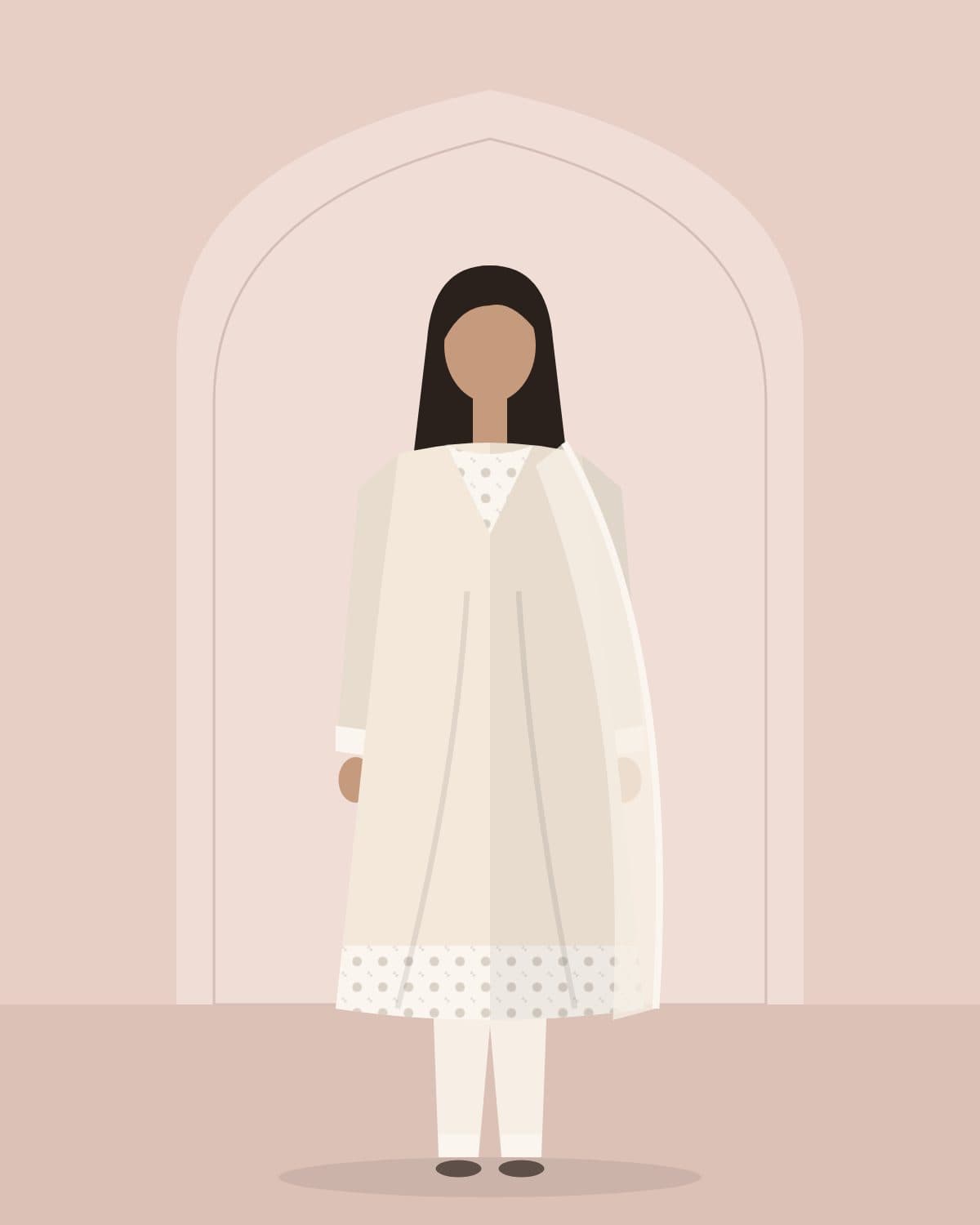
A dupatta is the most expressive piece in a Pakistani wardrobe. The same length of organza can read as demure, regal or entirely modern, depending on how you wear it. After a season of dressing brides’ sisters, Eid lunches and more mehndis than we can count, these are the drapes our styling team keeps coming back to, and exactly how to do them.
Start with the fabric
Before you choose a drape, consider what your dupatta is made of. Organza is crisp and holds a pleat, which makes it ideal for structured drapes that frame the shoulders. Chiffon is fluid and falls close to the body, so it suits looser, flowing styles. Net sits somewhere in between: light enough to float, firm enough to show off a heavily worked border.
A good rule of thumb: the stiffer the fabric, the fewer pins you need.
1. The one-shoulder drape
Our default for festive evenings, and the most forgiving. Pleat the dupatta lengthwise into soft folds about three fingers wide. Lay it over your left shoulder so the front falls to just above the knee, and let the back hang long. Secure it with a single safety pin hidden under the fold at the shoulder seam.
It keeps your hands free, shows off neckline embroidery and works with every silhouette, from straight shirts to kalidar pishwas and angrakhas.
2. The open drape
Lay the dupatta across the back of both shoulders and let the two ends fall evenly in front, like a stole. This is the drape for heavily embellished borders, such as gota, tilla or a scalloped cutwork edge, because the full length of the embroidery stays on display.
Pin each side discreetly at the shoulder so nothing slips while you greet a room full of relatives.
The stiffer the fabric, the fewer pins you need. A good organza practically drapes itself.
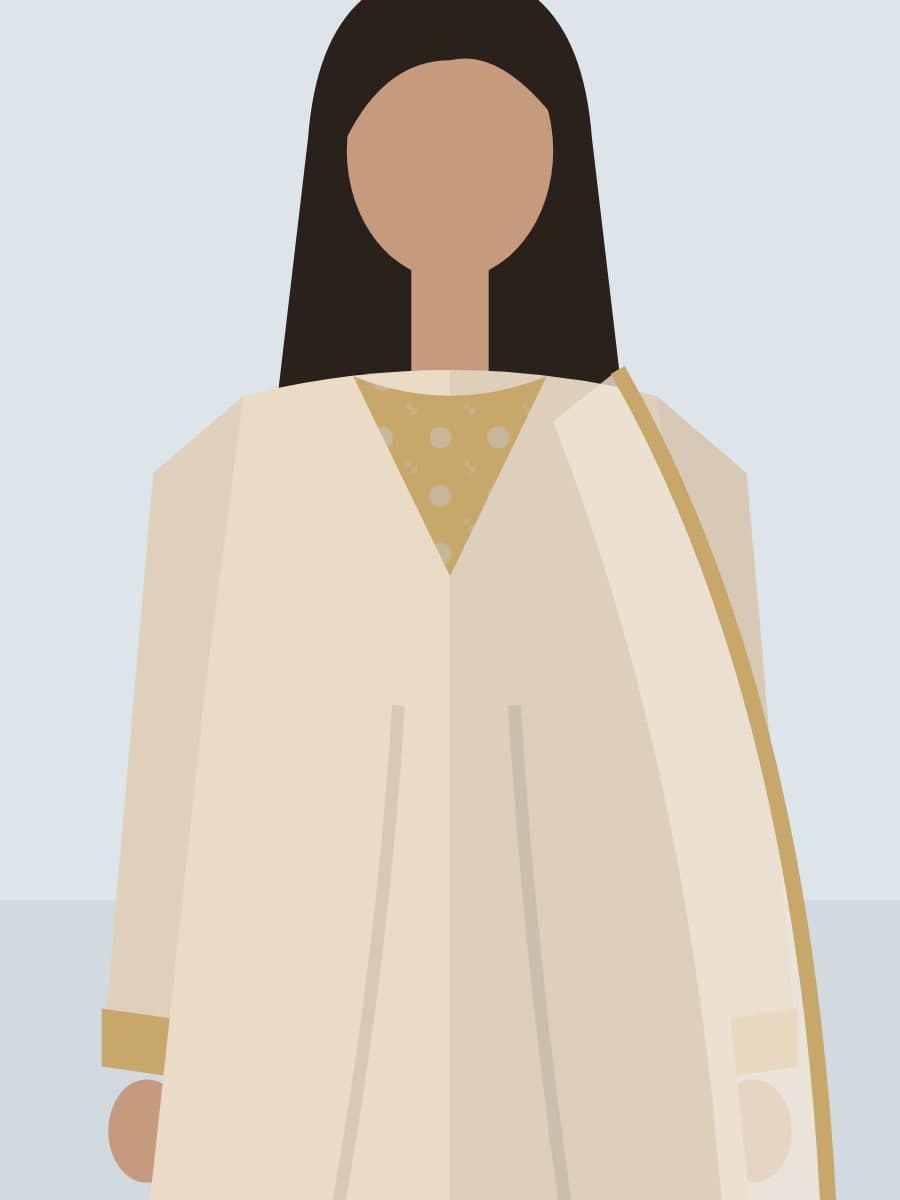
3. The cape
The most contemporary of the five, and our favourite for organza. Fold the dupatta in half lengthwise, place the centre at the nape of your neck and bring both ends forward over the shoulders. Pin at each shoulder, then let the fabric fall behind you like a short cape. It works beautifully over sharara and gharara sets, where you want volume below and clean lines above.
4. The traditional head drape
For nikkahs, milads and visits to elders. Place one end over your left shoulder, take the length behind your back and bring it softly over your head from the right so it frames the face. A small flat hairpin tucked into a low bun will hold even slippery chiffon all evening.
5. The belted drape
For a mehndi or a dholki where you plan to dance. Drape over one shoulder, cross the length diagonally over your body and secure it at the opposite hip with a slim embroidered belt or a string of pearls. Nothing slips, nothing trails on the floor, and the silhouette stays sharp all night.
Getting the proportions right
Length matters as much as the drape. Most of our festive dupattas are cut at two and a half metres, generous enough for every style above. If you are petite, let less length fall at the front and more behind you, so the line of the body stays long. If you are tall, the open drape and the cape both carry beautifully. And if your shirt is long, as with a kalidar or pishwas, keep the front of the dupatta above the hem so the two layers don’t blur together.
The stylist’s kit
Keep these in your clutch for any festive evening:
- Two or three small gold-tone safety pins
- Flat hairpins for head drapes
- Fabric-safe double-sided tape for slippery chiffon
- A travel steamer, if you are dressing away from home
Pairing notes
If your shirt is heavily embroidered, choose a dupatta with a worked border and a plain body, like our Sitara organza dupatta, so the two don’t compete. If your outfit is simple, let the dupatta do the talking: the embroidered border of the Chandni dupatta can turn a plain kurta into an evening look.
Caring for festive dupattas
Dry clean organza and net dupattas, and store them rolled rather than folded so the borders don’t crease along the same line each time. If a dupatta creases on the day, steam it from the reverse, keeping the steamer moving and a hand’s width away from any gota or tilla, which can tarnish with too much heat.