Craft
Inside the Atelier: 120 Hours of Zardozi
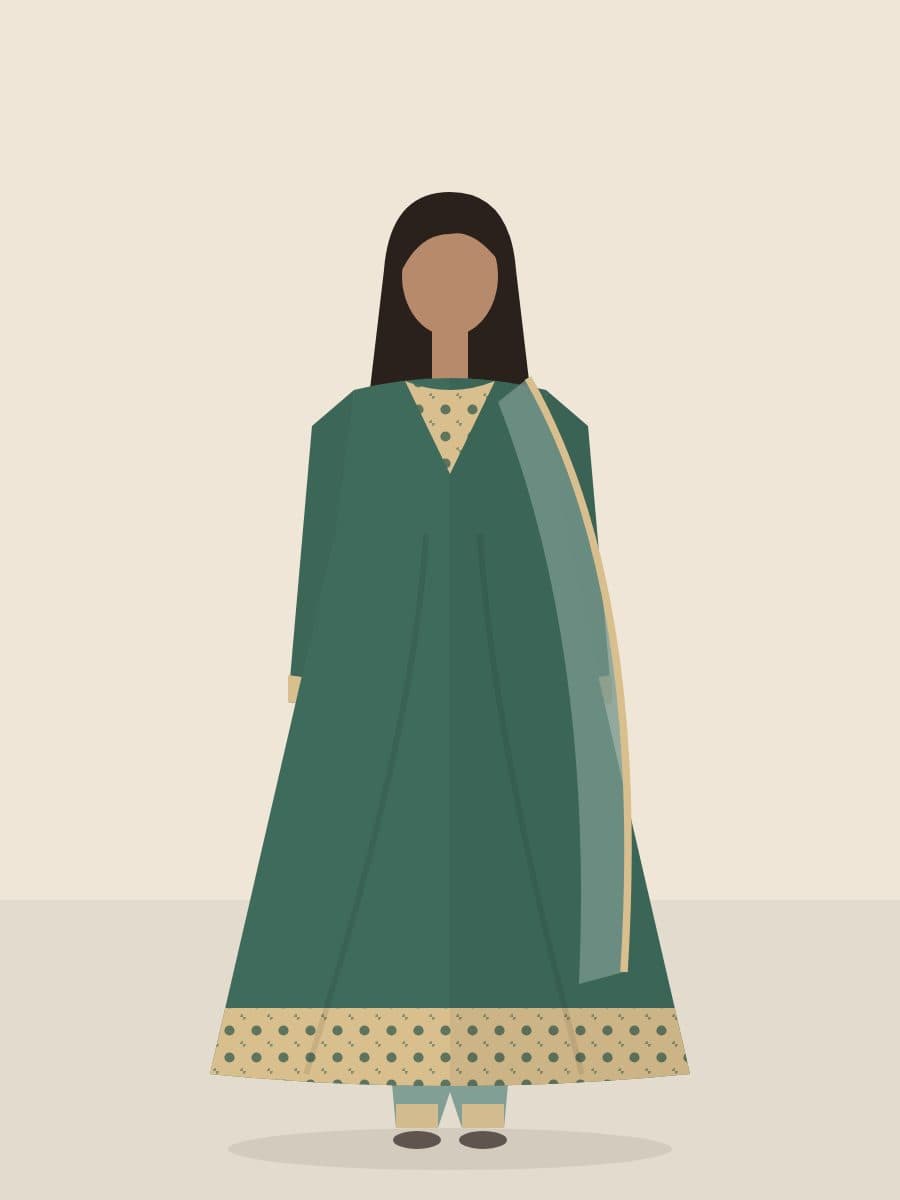
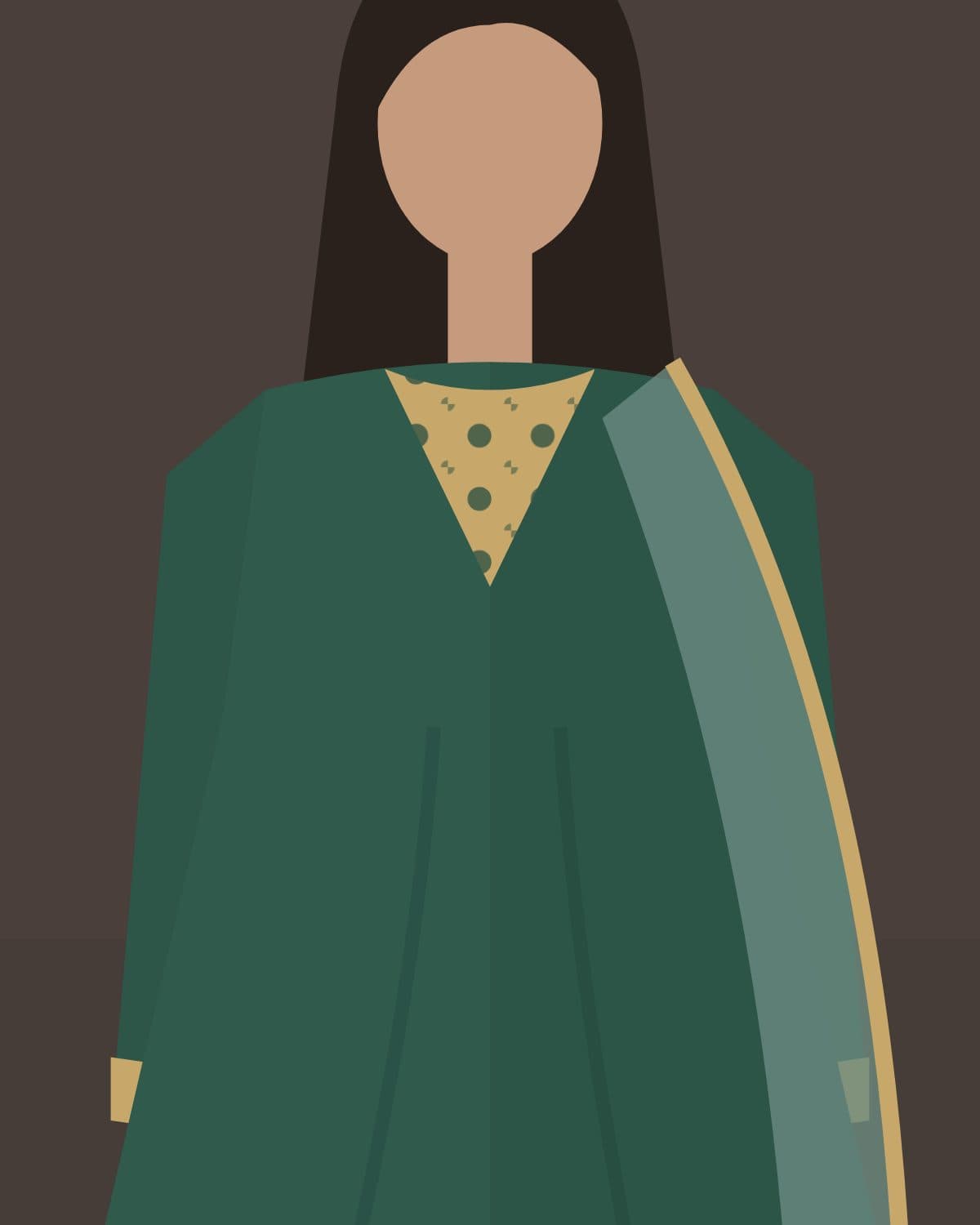
We followed a single Signature piece, the emerald Zumurrud angrakha, from the tracing table to the final press, and met the karigars whose hands spend five weeks on it.
By Sara Imtiaz, Journal Editor
4 min read
On the second floor of our Gulberg atelier, beneath a row of tall windows, eleven wooden frames stand side by side. Each holds a length of silk stretched taut as a drum. Around them sit the karigars, some of whom have done this work for four decades, and on any given morning you hear nothing but the soft pull of thread and old ghazals on the radio. This is where our zardozi happens. We followed one piece through every stage to understand where its 120 hours go.
Hour zero: the tracing
Every zardozi design begins as a drawing on butter paper. For Zumurrud, our design team drew a climbing vine of pomegranate flowers at full scale, adapted from a carved jaali screen in the old city. The drawing is then pricked along every line with a fine needle, laid over the silk and dusted with a chalk powder that passes through the holes, leaving a dotted outline.
The method is called khaka, and it hasn’t changed in centuries.
Hours 1–90: the adda
The silk is stretched on the adda, a low wooden frame, and up to four karigars work on it at once, sitting cross-legged on either side. Zardozi uses several kinds of metal thread, and each has a different job:
- Dabka: fine coiled wire, cut into tiny lengths and threaded like beads, for raised, textured fills
- Naqshi: a twisted wire with a bright, glinting finish, used for outlines
- Kora: a matte coil that adds depth beside the shinier threads
- Salma: a smooth, spring-like coil for petals and curves
- Sitara: tiny metal sequins that catch the light at the heart of each flower
Each element is couched by hand with an aari, a fine hooked needle, or an ordinary sewing needle depending on the stitch. The neckline of Zumurrud alone carries more than six thousand individual pieces of dabka.
A day at the adda
The working day starts at nine, after chai, and ends at five, with a long break at noon when the light is too harsh to judge gold against silk. Karigars rotate between pieces so that no one spends a whole day on the same motif, because tired hands make uneven stitches. On Zumurrud, four karigars took the neckline, two the sleeves and one the hem, each working from the same khaka so that the vine flows unbroken from one panel to the next.
A machine can copy the pattern. It cannot copy the patience.
Hours 90–110: the details
Once the main motifs are worked, the piece passes to our most senior karigar, Ustad Bashir Ahmed, who has been embroidering since he was twelve. He adds the final details, from the veins of each leaf to the single sitara at the centre of every flower, and checks every section under a daylight lamp. Anything that isn’t right is unpicked and worked again.
“People ask why it takes so long,” he says. “Because every piece of dabka is cut, threaded and placed by hand. You cannot rush metal. Pull too hard and it kinks; too soft and it lifts. Your hands learn the tension over years, not weeks.”
Hours 110–120: finishing
The embroidered panels come off the frame, are steamed from the back and stitched into the finished garment by our tailoring team. The lining is hand-finished at the neckline so that no metal touches the skin. Finally, every Zumurrud is wrapped in unbleached muslin with a card signed by the karigars who made it.
Why it matters
Zardozi has a five-hundred-year history in the subcontinent, and Lahore has long been one of its homes. But it is fragile craft. Young people are leaving it for steadier work, and machine embroidery has made imitations cheap.
That is why we pay our karigars fixed monthly salaries rather than piece rates, run a two-year apprenticeship for twelve trainees at a time, and credit the makers on every Signature card. When you wear a piece of zardozi, you are wearing roughly a working month of someone’s skill. We think that’s worth knowing.
Caring for zardozi
Metal thread is durable, but it dislikes moisture and friction. Always dry clean zardozi, never iron directly over the embroidery, and store the piece flat or loosely rolled in muslin with acid-free tissue over the worked areas. Keep perfume and attar away from the metal and the gold will hold its warmth for decades. Many of our customers now pass their Signature pieces on to daughters and nieces, which is exactly what they were made for.